Plenary Session 1
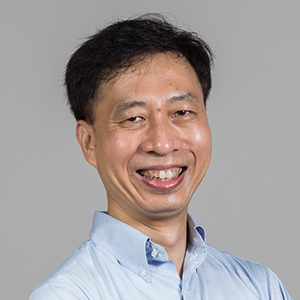
David Hsu
Title: Scalable Robot Decision Making in the Open World: Planning and Plan Prediction
Abstract: A hallmark of intelligence is the ability to do the right thing in myriad unfamiliar situations. The classic model-based approach to robotics draws a sharp boundary between the closed, known world and the open, unknown world: robot performance is guaranteed only in known situations. Data-driven robot foundation models, with their vast common-sense knowledge, have blurred this boundary and dramatically expanded robot capabilities in the open world. In this talk, I will argue that the long-term goal of scalable, robust robot intelligence necessitates an integration of model-based planning and data-driven plan prediction. Scalability depends on the interplay, rather than the conflict, between structural priors and data coverage. I will illustrate the general thinking with our work on robots aiming to operate in the open world by generating and verifying hypotheses on the fly. I will also speculate how agentic programming will come into play in the near future.
Biography
David Hsu is a Provost's Chair Professor in the Department of Computer Science, National University of Singapore (NUS) and the Director of Smart Systems Institute. He received BSc in computer science & mathematics from The University of British Columbia and PhD in computer science from Stanford University. At NUS, he co-founded NUS Advanced Robotics Center in 2013. He founded the NUS AI Laboratory (NUSAIL) in 2019 and served as the founding director. He held visiting positions in MIT Aeronautics & Astronautics Department and CMU Robotics Institute. He is an IEEE Fellow.
His research interests span robotics, AI, and computational structural biology. In recent years, he has been working on robot planning and learning under uncertainty and human-robot collaboration. His work won several international awards, including, most recently, Test of Time Award at Robotics: Science & Systems (RSS) in 2021 and JCAI-JAIR Best Paper Prize in 2022. More information on his research is available on the Adaptive Computing Laboratory (AdaComp) web site.
He has chaired or co-chaired several major international robotics conferences, including WAFR 2004 and 2010, RSS 2015, ICRA 2016, and CoRL 2021. He also served on the editorial boards of IEEE Transactions on Robotics, International Journal of Robotics Research, and Journal of Artificial Intelligence Research.