Program SubpageInvited Talk
Program / Invited Talk

Invited Talks

Invited Talk 1

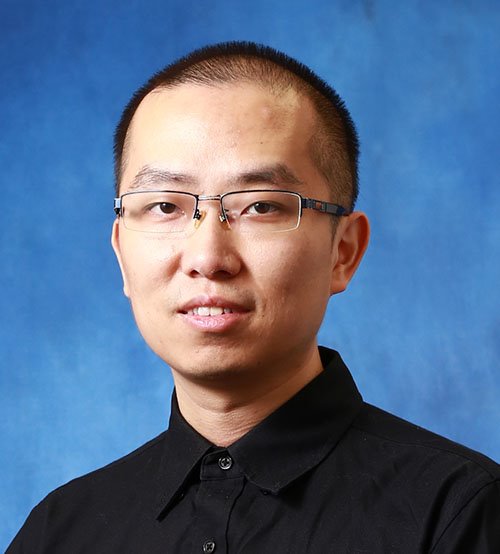
Harold Soh

Date: Thursday, 6 August 2026
Time: 10:20 AM - 10:50 AM
Affiliation: National University of Singapore (NUS)
Harold Soh

Title: Action Hallucinations in Embodied AI

Abstract: Recent VLA models and diffusion-based robot policies are highly expressive, but robotics is not just another generative modeling problem. In this talk, I will discuss action hallucination: generated robot behaviors that violate physical feasibility or fail as executable/safe plans. For generalist robots, this is a foundational safety problem: a policy cannot be reliably safe if its action generator does not respect the structure of physical behavior. Drawing on our analysis of generative VLAs, I will argue that these failures often arise from structural mismatches between feasible robot behavior and common generative architectures, not merely from insufficient data. I will outline three barriers that help explain empirical failures in robot foundation models. I will then discuss implications for safer generalist robots, including structured action spaces and verification-guided test-time computation.

Biography

Harold Soh is an Associate Professor in the Department of Computer Science at the National University of Singapore (NUS), where he directs the Collaborative Learning and Adaptive Robots (CLeAR) group. Harold completed his Ph.D. at Imperial College London with Yiannis Demiris on online learning for assistive robots.

Harold's current research focusses on machine learning and decision-making for trustworthy collaborative robots. His work spans cognitive modeling (specifically human trust) to physical systems (perception with novel e-skins) and has been recognized with best paper award nominations at RSS, HRI, and IROS.

Harold has served on the HRI committee as LBR Co-Chair (2019) and on the Technical Advances PC as a member (2020) and chair (2021). He is an Associate Editor of the ACM Transactions on Human Robot Interaction (2021). He regularly serves as PC member or reviewer for the top publication venues in AI (NeurIPS, AAAI, IJCAI) and robotics (ICRA, IROS, RSS, HRI).
Invited Talk 2

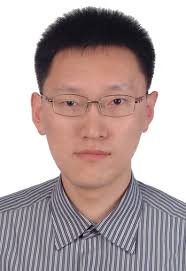
Wei-Shi Zheng

Date: Thursday, 6 August 2026
Time: 10:50 AM - 11:20 AM
Affiliation: Sun Yat-sen University
Zheng Wei-Shi

Title: Beyond Single-Robot Embodied Intelligence: Human-Robot Interaction and Closed-Loop Multi-Robot Collaboration

Abstract: Existing research on embodied intelligence predominantly focuses on single-robot manipulation, which suffers from limited capabilities when deployed in complex real-world scenarios. This work conducts explorations toward multi-robot embodied intelligence. Through the transfer of physical perception and interactive patterns, human-human interaction data are leveraged to realize natural, robust human-robot interaction. Furthermore, we propose a decoupled interaction framework and a multi-agent closed-loop system, enabling cross-morphology robots to autonomously form teams, allocate tasks, collaborate and execute missions in a closed-loop manner, thereby breaking through the capability bottlenecks of individual robots. This talk will present our latest research advances and practical achievements in human-robot interaction, multi-robot coordination, and cross-morphology embodied intelligence.

Biography

Dr. Wei-Shi Zheng is currently a Full Professor at Sun Yat-sen University. His primary research interests cover embodied artificial intelligence, multi-agent system learning, and continual learning. He has served as Area Chair / Senior Area Chair for numerous top-tier conferences. He serves as an Associate Editor and editorial board member for IEEE TPAMI, Artificial Intelligence, and Pattern Recognition. He once participated in the Microsoft Research Asia Young Faculty Visiting Program. His academic honors and fellowships include: Cheung Kong Distinguished Professor, IAPR Fellow, recipient of the Excellent Young Scientists Fund (NSFC), and holder of the Royal Society Newton Advanced Fellowship (UK).

Invited Talk 3

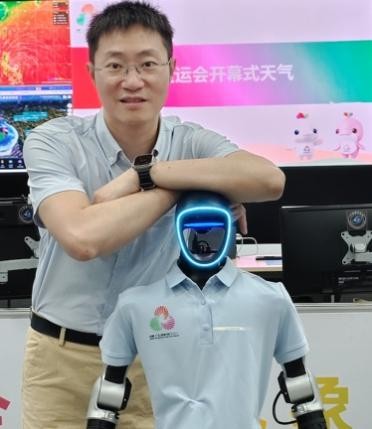
Liming Chen

Date: Thursday, 6 August 2026
Time: 11:20 AM - 11:50 AM
Affiliation: Ecole Centrale de Lyon
Liming Chen

Title: A Journey in Robot Learning through Simulation: Going Quicker, Larger, and More Realistic

Abstract: Simulation has become one of the key enablers of modern robot learning, transforming the way robots acquire manipulation, navigation, and interaction skills. Over the past decade, the field has evolved from using simulation primarily as a rapid prototyping tool to leveraging it as a scalable platform for generating massive amounts of diverse experience. Today, advances in physics engines, photorealistic rendering, generative AI, and foundation models are driving a new generation of simulation environments capable of supporting the training of increasingly general robot intelligence.

In this talk, I will present my research journey through this evolution, highlighting three successive stages that have shaped our work: going quicker, by accelerating algorithm development and reinforcement learning through efficient simulation platforms; going larger, by scaling data generation and robot learning to millions of interactions using parallel simulation and synthetic data; and going more realistic, by narrowing the reality gap through differentiable simulation, multimodal sensing, tactile interaction, and foundation models that integrate vision, language, and action.

Drawing on examples from our work on robotic grasping, manipulation, synthetic dataset generation, teleoperation, and simulation platforms such as PandaGym and FruitBin, I will discuss how simulation has evolved from a validation tool into a central component of the robot learning pipeline. I will also examine emerging challenges, including simulation fidelity, scalable world models, embodiment, lifelong learning, and the integration of physical priors with large-scale foundation models.

The talk concludes with a perspective on the next generation of robot learning systems, where simulation serves not merely as a substitute for reality, but as an intelligent partner for building embodied agents capable of learning continuously, adapting efficiently, and generalizing across tasks and environments.

Biography

Liming Chen is Distinguished Professor at École Centrale de Lyon, France, where he holds the Chair of Artificial Intelligence and Robotics and is a Senior Member of the Institut Universitaire de France (IUF). His research focuses on embodied AI, robot learning, computer vision, and foundation models for robotics, with particular emphasis on manipulation, simulation, multimodal perception, and lifelong robot learning.

Over the past two decades, Professor Chen has led numerous national and European research projects in robotic manipulation, computer vision, and AI. His contributions include widely used datasets and open-source platforms such as Jacquard, PandaGym, FruitBin, and synthetic simulation frameworks for robotic grasping and manipulation. His research has also advanced domain adaptation, continual learning, 3D perception, tactile sensing, and simulation-to-real transfer.

Professor Chen has published more than 300 scientific papers and supervised over forty PhD students and postdoctoral researchers. He serves on the editorial boards and program committees of leading conferences and journals in robotics, computer vision, and artificial intelligence. He currently co–leads the French-Singaporian initiative on Embodied AI, aiming to develop foundation models for robotics.

His current research explores how large-scale simulation, generative AI, world models, and multimodal foundation models can enable robots to acquire versatile skills and operate robustly in complex real-world environments.

Invited Talk 4

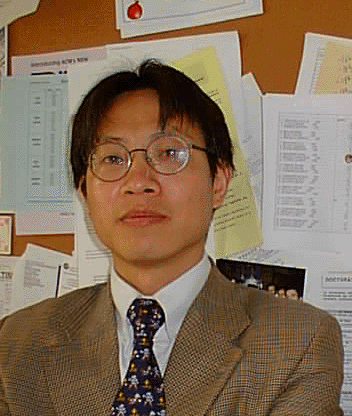
Hongsheng Li

Date: Friday, 7 August 2026
Time: 9:45 AM - 10:15 AM
Affiliation: The Chinese University of Hong Kong
Hongsheng Li

Title: To be announced

Abstract: To be announced.

Biography

Hongsheng Li received the bachelor’s degree in automation from East China University of Science and Technology, and the master’s and doctorate degrees in computer science from Lehigh University, Pennsylvania, in 2006, 2010, and 2012, respectively. From 2013-2015, he was an associate professor in the School of Electronic Engineering at University of Electronic Science and Technology of China. He is currently an associate professor in the department of Electronic Engineering at the Chinese University of Hong Kong.

Invited Talk 5

Ran He

Date: Friday, 7 August 2026
Time: 10:15 AM - 10:45 AM
Affiliation: National Laboratory of Pattern Recognition, Institute of Automation, Chinese Academy of Sciences
Ran He

Title: From Partial Observability to Physical Execution: Perception–Planning–Action in Real-World Robot Manipulation

Abstract: As embodied intelligence moves into open and dynamic real-world environments, reliable robot manipulation increasingly depends on closing the gap between visual perception and physical execution. Partial observability introduces substantial uncertainty into robot state estimation, while visually plausible plans may still violate contact dynamics and physical causality. Translating incomplete or noisy visual plans into low-level actions can further introduce errors and control instability. Moreover, vision alone cannot reliably infer the tactile states, internal grasping forces, or external interaction wrenches required for contact-rich tasks, while embodiment mismatch between data collection and deployment can further weaken policy robustness. These limitations span state estimation, generative planning, action decoding, and contact-aware execution, calling for closer coordination across state representation, generative planning, action decoding, multimodal sensing, and compliant control. To address these challenges, this talk will present recent advances in perception-aligned state estimation, physically consistent generative video planning, truncation-robust action recovery, and multimodal interaction learning with compliant execution.

Biography

Ran He received his bachelor's degree (2001) and his master's degree (2004) from the School of Computer Science and Technology, Dalian University of Technology (DUT). After that, he was a Ph.D. candidate in the Institute of Automation, Chinese Academy of Sciences (CASIA), where he received his Ph.D. degree in 2009.

He is now a full Professor in the National Laboratory of Pattern Recognition (NLPR, CASIA) and University of Chinese Academy of Sciences. He is leading a "2035 Innovation Team" of AI research in CASIA.

He is interested in algorithms for biometrics (face recognition and synthesis, iris recognition, person re-identification), representation learning (pre-training networks using weak/self supervision, or transfer learning), generative learning (generative models, image generation, image translation). His work explores topics in machine/deep learning and computer vision.

He has published more than 200 papers in international journals and conferences, including reputable international journals such as IEEE TPAMI, IEEE TIP, IEEE TIFS, IEEE TNN, IEEE TCSVT, and top level international conferences like CVPR, ICCV, ECCV, NeurIPS. He is serving as the Editor board member of IEEE TIP, IEEE TIFS, IEEE TCSVT, IEEE TBIOM, and Pattern Recognition. He has served as the Area Chair of international conferences like CVPR, ECCV, NeurIPS, ICML, LCPR, ICPR and IJCAI.

He is the Fellow of IAPR (2021), and the Fellow of IEEE (2025).

His research was supported by "Beijing Science Fund for Distinguished Young Scholars" (2018) and "NSFC for Excellent Young Scientist Programme" (2016). His research has won the " CSIG first-class Natural Science Award " (2021), "Beijing second-class Science and Technology Award" and "CAAI second-class Science and Technology Innovation Award" (2015).